
Modfather Reigns Supreme: Paul Weller Delivers a Waterfront Masterclass in Liverpool
The uber-cool Modfather was back entertaining his Liverpool fans. A pure masterclass in music! Last night couldn’t have been more perfect. A


A century after the publication of F. Scott Fitzgerald’s The Great Gatsby, The Broken Spine presents Beautiful Little Fools: a radical poetry anthology reimagining the voices silenced in the Jazz Age.

At The Broken Spine, we’ve always been more than a poetry press, we’re cultural commentators. From literature and film to music, gaming, professional wrestling, and beyond, we’ve built our reputation by speaking to, and often against, the mainstream. We don’t shy away from difficult questions. We don’t celebrate blindly. We interrogate.
So when the centenary of The Great Gatsby approached, I knew we had to do something. I couldn’t let such a significant anniversary for such a significant text pass unacknowledged. But rather than simply marking the moment, I wanted to do what we’ve always done best: challenge it. Interrogate it. Rethink it.
Much like BOLD reevaluated the shape and image of masculinity, and my own collection Twenty Seven tore into the mythology around Jim Morrison, this project needed to lift the veil on Gatsby, not for nostalgia’s sake, but to ask what was hidden behind the glitz. Who was silenced? Who got left behind?
That’s how Beautiful Little Fools came to life.
This isn’t a tribute. It’s not a fan letter. These poems don’t cling to Fitzgerald’s coattails; they cut their own paths through the sequins and smoke. The voices here speak back across a century, breaking through the hush of ash heaps and champagne, and giving weight and shape to the figures Gatsby’s world was never built to hold.
The first seeds of the project were planted during a conversation with Jay Rafferty. We were bouncing ideas back and forth, and Jay gave me the title: Beautiful Little Fools. That was it. It put an end to Ash Heaps & Millionaires, our working title at the time, and reframed the entire project in one perfect phrase. Jay’s instinct for tone, myth, and title-setting was pivotal. It was the kind of creative nudge that turns a loose idea into a living project. I owe him a great deal for that.
Not long after, I spoke to Matthew M C Smith; a friend, poetry aficionado, and someone whose opinion I value deeply. At the time, I was still coming out of a rough patch health-wise, and I was trying to figure out what The Broken Spine could and should become. I ran a handful of future ideas past him, and Beautiful Little Fools was the one he stopped on. The one he said would work. That conversation buoyed me. It helped me get back to doing this with purpose, not just persistence.
Karen Pierce Gonzalez came on board later, and with her came a much-needed infusion of energy and perspective. I knew I needed both a female and an American editorial voice beside mine, not as a token, but as a necessary counterweight. I’m all about authenticity. Karen brought not only her talent, but her clarity, her drive, and her fierce devotion to telling stories that matter. Her fingerprints are on every page of this book.
No book like this exists without the generosity, courage, and craft of its contributors. To every poet who submitted, trusted us, and allowed their work to be part of Beautiful Little Fools, thank you.
You didn’t just write poems; you unearthed truths. You reimagined a century-old narrative and gave it new breath, new fire, new heartbreak. You brought glamour and grief, satire and sorrow, myth and modernity, sometimes all within a single stanza.
What you created here is a reshaping of Gatsby. You refused nostalgia. You interrogated the dream. You made space for the voices long lost in the noise of champagne flutes and jazz horns.
It has been a privilege to read, select, and present your work. This book belongs to all of you.
A century on, The Great Gatsby remains one of the most scrutinised, adored, and debated texts in American literature. But the glamour has long obscured the ghosts. The Jazz Age, with its wealth and waste, often served as a smokescreen for inequality, for erasure, for the silencing of women, of workers, of outsiders. This book lifts that smoke.
The line that gave us the title: “I hope she’ll be a fool — that’s the best thing a girl can be in this world, a beautiful little fool” – was always a fiction dressed as fatalism. It’s also a lie. A line that was never meant to be the end of the story. This book refuses to let that line stand unchallenged. These poets are not playing supporting roles. They’re rewriting the script.
These are poems that demand we look again. That we reimagine Gatsby not as a romantic icon, but as a mirror: cracked, refracting, uncertain. In the green light’s flicker, in the clink of glasses and the throb of jazz, these poems find new stories. And in doing so, they remind us what literature should always do: evolve, reflect, and respond.
Now available worldwide, this is a landmark collection for us, a line in the sand, a statement of what we believe poetry can be: intelligent, emotionally resonant, culturally engaged, and unafraid.
Welcome to Beautiful Little Fools. The party has already started. But this time, everyone has a voice.

The uber-cool Modfather was back entertaining his Liverpool fans. A pure masterclass in music! Last night couldn’t have been more perfect. A
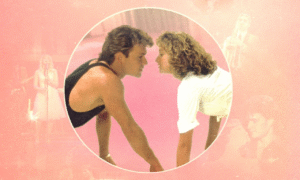
The live screening of Dirty Dancing with full band at The Philharmonic Hall made for a wonderful summer’s night of uplifting music
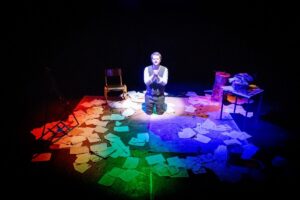
In choosing to depict Vincent Van Gogh from the perspective of bereaved younger brother Theo, writer-actor Joseph Winder has created a play