


Modfather Reigns Supreme: Paul Weller Delivers a Waterfront Masterclass in Liverpool
The uber-cool Modfather was back entertaining his Liverpool fans. A pure masterclass in music! Last night couldn’t have been more perfect. A
Their Breasts Aren’t Perky Enough
That was the line that cracked it open. Said in passing, but so bloody accurate it might as well have been chiselled into stone. Karen said it to me — Alan — during one of our ongoing conversations about the tired tropes and soft-focus strategies used to promote women writers. Once she said it, we couldn’t unsee it.
This article is part of that same conversation. I’m here because I was present when the idea sparked — but this is not my project to lead. After this piece, I’ll step back. #NotJustPretty will be carried forward by Karen and the women at its heart. My role is to contextualise how it began; theirs is to take it on, to make it real, to ensure it thrives.
Because here’s the truth: women — especially women who don’t fit neat, Instagrammable ideals — are still being softened, filtered, and curated into irrelevance by indie publishers who should know better.
#NotJustPretty is our answer to that.
It’s a bold new strand at The Broken Spine, designed and led by women, and created specifically to challenge the reduction, the prettification, the subtle erasures still at play in literary culture. It uplifts voices that rarely get the centre stage — trans women, queer women, working-class women, women of colour, disabled women, fat women, older women, neurodivergent women, non-cis women — and insists they be seen and read in all their real, messy, brilliant complexity.
This isn’t a side project. This is a serious intervention.
Why Now? Why Us?
Alan:
I’ve always been something of an agitator. I’m not interested in playing it safe. I see cracks in the system — where writers are ignored, where marketing takes precedence over merit, where representation is all performative optics and no depth. Those cracks ruin books, they ruin trust, and yes, they ruin friendships too.
When I spotted a wave of indie publishers using the same soft-focus flower-petal bullshit to promote their women contributors — same poses, same pastels, same flattening — I said something publicly. And privately, I turned to Karen, someone I trust beyond measure.
I asked her if she thought there was space for The Broken Spine to support a women-led, women-centred project — one that refused to prettify, that created space for voices often pushed out of frame. She didn’t hesitate. She said yes to all of it. To the project. To taking a more official role within the press. To pushing back.
Karen:
Knocking on the door to be let in just isn’t working. As a crone, an aging woman, I am all too aware of the discriminations and exclusions on the other side of that door. And that applies as well to my family, friends, and colleagues of all shapes and sizes who hurt themselves emotionally and physically trying to fit into fleeting male-centric straightjacket fantasies of desire.
Don’t these women deserve to have the love, acceptance, and dignity that truly is their birthright?
Publishing’s Pretty Problem
We’re not against beauty. Let’s be clear. We’re against the kind of forced, airbrushed, hollow version of beauty that publishers — mainstream and indie alike — still default to when they don’t want to do the work. Aesthetic over authenticity. Marketable over messy.
And it’s not harmless.
Alan:
Mainstream houses have a long history of packaging women into narrow ideals. That’s no surprise. Although, it’s being redressed in some quarters. What’s harder to swallow is seeing indie presses — the very publishers who serve as supposed radical alternatives — repeat the same tired playbook. Indie publishers have the freedom to break the mould, to resist market pressures, to champion voices without filtering them through an Instagrammable lens. When they don’t, it’s revealing. It’s alarming. It’s lazy at best, disinterested or even exploitative at worst.
If you’re a middle-class white guy posting soft-focus pictures of women to sell their books — and raise your own profile — that’s not cute. That’s damaging. You might not see it. You might argue you publish plenty of women. (Lots of my friends are women too, right?) But if you’re shaping how writers are represented — and sold — without real accountability to those writers, you’re not amplifying them. You’re using them.
We want to do better than that. We are doing better than that. #NotJustPretty exists so that all those who do or have identified as women — or lived as women in any sense — can feel safe, seen, and creatively sovereign. That’s not a marketing gimmick. That’s the baseline.
Karen:
There are also those seductive, blouse-buttons-open cleavage or fish net thigh stockings. So, so hurtful because this is what is being sold, not the prose, poetry, music, or art itself. Since when does an airbrushed perfect body, removal of wrinkles or signs of physical disability, the plumping of lips, and/or coloring of grey hair make one’s work more worthy?
I have experienced the shame of not having tantalizing head/body shots some editors prefer and am now much more cautious about who I present future work to.
Also, unfortunately, in this ‘youth-craving’ culture, I still tend to shy away from revealing my age. At 71, youthfulness in terms of years is an oxymoron. But my years have been hard earned and won; through them I continue to hone a creative freshness (personally and professionally) that truly does ripen with age.
And much to my heart-breaking horror I have seen family members sob with relief when they encounter novel heroines, musicians, or film actresses whose sexual identities and preferences, thick or bare-bone bodies, and inspiring out-of-the box thinking were truly appreciated and honored.
What #NotJustPretty Will Be
This isn’t a one-off anthology. It’s a rolling programme of publishing, exhibitions, interviews, digital showcases, and live events. It launches formally as part of the lead-up to Bombshell: One Hundred Years of Icon & Illusion — our forthcoming 2026 anthology marking the 100th anniversary of Marilyn Monroe’s birth.
But #NotJustPretty will outlive that. It’s a long-term investment in equity and visibility. Here’s what’s already in motion:
The artists, editors, and collaborators are giving their time freely—because they believe in the vision. They believe in the need.
Karen:
‘Powerful’ and ’thrilling’ is what I instantly hear when I reach out to invite creative women from all over the globe to join us. Everyone WANTS to be a part of the new wave; a profound rising of joy and excitement that this project is now here.
The tide’s coming in and bringing with it a world for bold, beautiful, and free women.
A Safe Space, Not a Silent One
Alan:
I don’t run this press as a boys’ club. I never have. I know when to step back. I can’t lead a project like this authentically — I’m a straight, white bloke. So I’ve handed the reins to Karen and the contributors. I provide the platform. I protect the space. But I’m not here to centre myself in it.
That’s the point.
We’re not following trends. Frankly, it would be a lot easier to just do what everybody else is doing and stay quiet. But we’re not here to play nice. We’re here to make space — and make noise.
Karen:
Who else can possibly do this liberating work? From within, we know the obstacles and pain of being subjugated; subservient. It is a woman-to-woman job to build bridges that cross over oceans of isolation and manmade, generational social scars. We owe a great deal to our predecessors who accepted the challenges as best they could to rewrite who they were. And we owe it to the women who come after us to keep breaking free of roles that have been forced upon us. Let’s get rid of despair and self-hatred about not being ‘acceptably or appropriately beautiful bedfellows’ too often treated as commodities to use and abuse.
For the Unseen, the Unfiltered, the Unbothered
#NotJustPretty isn’t just about women who’ve been overlooked. It’s about readers who are tired of being spoon-fed the same narrow ideals. It’s about building something brave, bold, and deeply necessary.
We’re not chasing clicks. We’re not curating hashtags. We’re building a home for work that deserves better — from people who’ve had to fight for every scrap of visibility and credibility.
And if you’re reading this thinking ‘Finally’”’ — then you’re who we’re doing it for. If you’re reading this and wondering what the point is — then you probably need to check your privilege.
Karen:
Readers should know, they are not alone. The time has come, thanks to the evolving #MeToo and other explosive movements calling us to step out of the shadows; to not be afraid of who we are really are. This is where true power resides.
Moving forward, #NotJustPretty, still in its infancy.is already a vibrant life force. Honestly, women innately know this is a moment to embrace. When we gather together to share our talents, to applaud our differences, we are in fact living a dream-come-true: the cultivation of a landscape where our work as poets, writers, artists and musicians thrives because of its intrinsic value.
Follow the project using the hashtag #NotJustPretty and keep up with releases, submissions, and events on The Broken Spine website.
Our first ever event will take place online via Zoom on October 4th at 20:00 GMT, running for 90 minutes and will be free to attend (with donations warmly welcomed). The evening will feature two poets offering 15-minute sets: Rusty Rose, known as the ‘Grandmother of Stonewall’ and current LGBTQ+ Poet Laureate of Long Island, will read from her collections; and Lucy Heuschen, whose debut collection Daughter of Fire is newly published by Yaffle Press, with previous pamphlets from Hedgehog Press and The Broken Spine. We’re also proud to include a short feature from poet and filmmaker Jenny Wong, screening two of her micro poetry films (total runtime: six minutes). The rest of the evening will be given over to the open mic — twelve readers, four minutes each — with spaces already confirmed for Katie Jenkins, Laura Grevel, and Jenevieve Carlyn.
Site Cover Artist Credit: We Are All, Tala Lillie
Also lined up for forthcoming events on November 8th and January 24th are an exciting range of artists and poets, including Phynne Belle, Debby Segal, Sylvia Van Nooten, Jennifer DeLeong, Heather Fletcher, Laura Grevel, Cat Balaq, Fidel Walsh Hogan, Jenn Givan, Jenny Wong, Marcelle Newbold, Jenevieve Carlyn, and Benedicta Norell. Each brings a distinct voice or visual approach, and we’re looking forward to sharing more details about these events in due course.

The uber-cool Modfather was back entertaining his Liverpool fans. A pure masterclass in music! Last night couldn’t have been more perfect. A
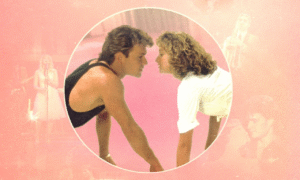
The live screening of Dirty Dancing with full band at The Philharmonic Hall made for a wonderful summer’s night of uplifting music
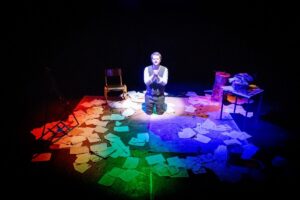
In choosing to depict Vincent Van Gogh from the perspective of bereaved younger brother Theo, writer-actor Joseph Winder has created a play
The Broken Spine is a poetry and arts collective proudly published on the coastal edge of North-West England. Founded in 2019 by Alan Parry and Paul Robert Mullen – two school friends reunited after twenty years through a mutual love of poetry.