Why We Created an Anti-Prize: On Poetry Awards, Indie Presses, and the Myth of Prestige
Poetry prizes are everywhere. So are prize-nominated books, prize-listed poets, and presses (not so) quietly using awards as a marketing strategy. Ugh!
And honestly? It’s exhausting to watch.
What annoys us most is seeing independent presses, the ones who talk about community, care, and doing things differently, rely on prizes to sell books. Not because the work needs it, but because prestige still shifts units.
Let’s be clear: most poetry prizes aren’t about poetry. They’re about visibility, validation, and sales.
And when indie presses adopt the same tactics as large publishers, using nominations and awards as shortcuts to authority, they stop being alternatives. They just become smaller versions of the same system.
That’s not what we’re here for.
Why We’re Mostly Anti-Prize
We are, broadly speaking, anti-prize.
Yes, we run a summer competition to identify work we want to publish over the following year. That’s a practical editorial tool, not a prestige exercise. It helps us read widely and find poems we believe in.
Yes, we run a Reader’s Choice Award, because readers deciding what they love makes sense. It removes gatekeepers and puts power where it belongs.
What we don’t do is use prizes or nominations to:
sell books
elevate authors
create artificial hierarchies of worth
Using prizes to legitimise work or dictate taste is bullshit behaviour, especially for presses that claim to be community-led.
Poems don’t become better because they’re nominated. Books don’t gain moral authority because a panel said so.
Readers don’t need permission.
The Problem With Poetry Prizes
Poetry prizes like to pretend they identify the best work. They don’t.
They reward:
taste
timing
access
networks
That doesn’t make them evil, but pretending otherwise is dishonest.
When prizes are used as proof of value, they turn poetry into a managed ecosystem where gatekeepers tell readers what to like. That’s bad for poetry, bad for writers, and bad for communities that already struggle for oxygen.
So instead of complaining quietly, we decided to prove the point.
Why We Created Our Own Crowdfunded Poetry Prize
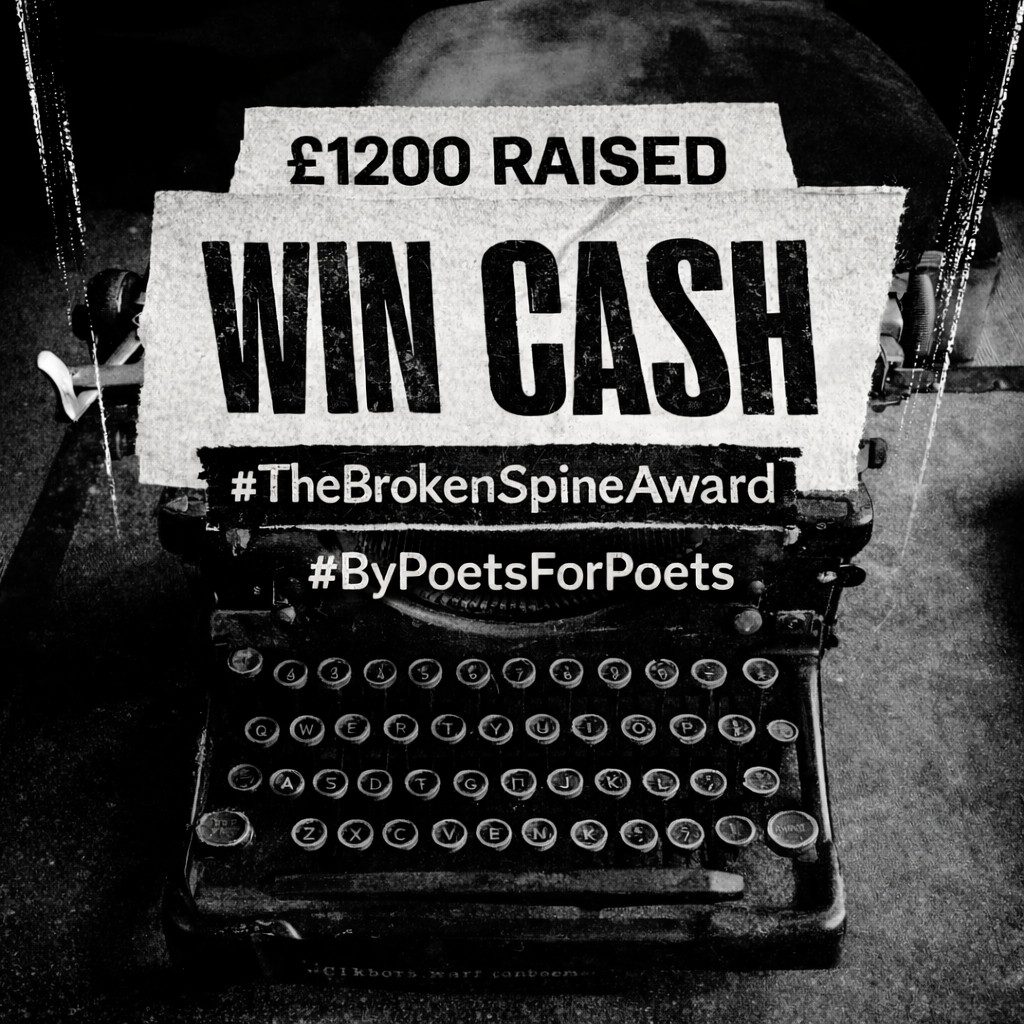
We created The Broken Spine Award as an experiment, an anti-prize.
We wanted to show just how arbitrary prizes really are.
So we did it openly and without institutional backing. We didn’t chase sponsors. We didn’t dress it up in arts-funding language. We didn’t pretend it was life-changing.
We asked the poetry community directly.
We gave time instead of branding:
workshops
open mics
events
And we asked people to chip in if they could.
We hoped to raise more money — genuinely. And it was hard. Fundraising always is.
But what matters is how the money was raised: peer to peer, shoulder to shoulder, without prestige doing the work for us.
What This Anti-Prize Actually Does
This prize will award three poets some actual cash. They will feel good about it, and they should. But let’s not lie about what it means.
It won’t:
change their lives
break glass ceilings
unlock publishing careers
It simply means one editor liked these three poems best.
That’s it.
No claim to objectivity. No myth of “the best”. No false authority.
And that honesty is the entire point.
Your Prize-Nominated Book Isn’t More Worthy
A poem with a prize sticker on it is not inherently better than one without. A nominated book is not more deserving of attention than any other.
Prizes don’t confer worth. They just signal approval within a system.
Readers should be trusted to decide what matters to them — not instructed by prizes, panels, or presses borrowing authority to sell product.
Why This Will Only Happen Once
This anti-prize will only ever happen once.
It will always be free to enter. It will never become a brand. It will never be used to sell books.
No legacy. No prestige ladder. No institutional creep.
Just a single, honest gesture: poets paying poets, a community backing itself, and a public refusal to pretend prizes are anything more than they are.
What This Is Really About
If you contributed, you didn’t do it for recognition. You did it for your peers.
You did it because poets deserve money more than they deserve validation theatre.
This is how we show love for the poetry community — directly, imperfectly, without selling out.
This is the anti-prize. And once it’s done, it’s done.
Share this article
WhatsApp
Email
Telegram
Alan Parry
Alan Parry is a Merseyside-based writer, editor, critic, and community organiser whose work moves with political intent. His debut novella Peeling Apples (2025) is a lean, emotionally charged portrait of grief, masculinity, and fractured family ties, written with the kind of restraint that hits harder than flourish ever could.
His poetry: Neon Ghosts (2020), Belisama (2021), Echoes (2022), and Twenty Seven (2023) - draws from a different palette: rhythmic, haunted, and musically alive. Influenced by Latin jazz, girl group heartbreak, and northern soul, his poems hum with emotional complexity and working-class lyricism. This is where the softness sits, alongside the bite.
Parry is political. Always has been. His writing doesn’t seek approval, it seeks truth. As founder of #PromoteIndieLit, he built a free-access platform where indie writers and presses can get their work seen and reviewed without begging permission. He also curates and hosts events, both live and digital, that prioritise community over clout, conversation over performance.
As a critic and commentator, Parry’s voice is direct, unvarnished, and deeply rooted in lived experience. Whether reviewing poetry or interrogating pop culture, he calls it as he sees it, with clarity, care, and no interest in playing nice with systems that exclude.
Parry doesn’t write to charm. He writes to challenge, connect, and keep the margins visible. If you’re looking for polish, look elsewhere. If you’re looking for honesty, you’ve found it.
Starring Billy Butler, Lesley Butler, Sam Heller, Sam Alton, Christopher Lee Power, Adam Johnson, Catherine Howard, Leslie Longley, Sarah-Lou Fletcher, Jodie White,